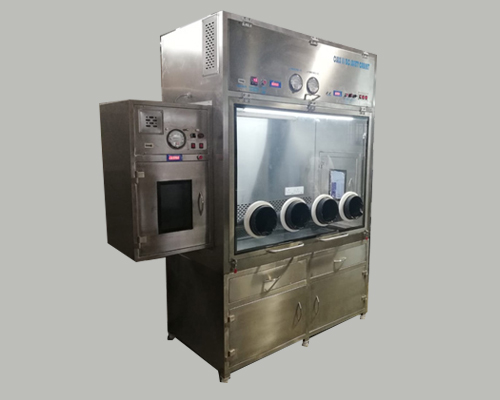
Bio Safety Cabinet Manufacturers in Chennai | 95000 82797

Biosafety Cabinet Manufacturers in Chennai for pharmaceutical, research and laboratory applications. Call MicroFlow Devices at 95000 82797.

No.1 Bio Safety Cabinet Manufacturers in Chennai

Plot No.1, SIDCO Industrial Estate, Phase – II,
Thirumudivakkam, Chennai – 600 132.
Check-in: 8:00 AM – 10:00 PM
24/7 Security & Support

Book Your Services
At Micro Flow! Now

Top Biosafety Cabinets Manufacturers – Protecting Your Laboratory Environment

Explore a range of high-performance biosafety cabinets from top manufacturers, designed to provide maximum protection for both personnel and products in laboratory settings. Microflow biosafety cabinets offer advanced airflow and filtration systems, ensuring a contaminant-free workspace for handling hazardous materials. Ideal for pharmaceutical, biotech, and research laboratories, our cabinets are built to meet stringent safety standards, with customizable options to suit your specific requirements. Trust in our expertise to deliver reliable and durable biosafety cabinets that prioritize safety, efficiency, and compliance with industry regulations.

Reliable Biosafety Cabinets for Laboratories and Research Facilities

MicroFlow Devices India Private Limited provides laboratory and cleanroom-related equipment for specialized industrial, pharmaceutical and research applications. A Biosafety Cabinet (BSC) is a laboratory containment device designed to provide a controlled workspace for handling biological materials. Depending on its class and configuration, it can help protect laboratory personnel, the surrounding environment and the work being performed from exposure to biological aerosols.

Biosafety cabinets are used in pharmaceutical laboratories, biotechnology facilities, microbiology laboratories, medical research centres and other facilities that handle biological materials. Selecting the correct cabinet requires careful consideration of the type of work, biological risk assessment, required protection level, airflow design and applicable safety standards.

What Is a Biosafety Cabinet?

A biosafety cabinet is an enclosed laboratory workstation that uses controlled airflow and filtration to provide defined levels of protection during certain biological procedures. Many biosafety cabinets use High-Efficiency Particulate Air (HEPA) filters to control airborne particles within the cabinet and, depending on the cabinet class, in the exhaust air.

Biosafety cabinets are generally classified as Class I, Class II and Class III. Each class offers a different combination of personnel, environmental and product protection. The appropriate cabinet must be selected based on the laboratory’s risk assessment and intended application.

Key Features of Biosafety Cabinets

  • HEPA Filtration: Uses specified filtration arrangements to control airborne particulate matter, depending on the cabinet type.
  • Controlled Airflow: Designed to manage airflow within the work zone to support containment.
  • Personnel Protection: Appropriate cabinet classes help reduce exposure to biological aerosols when used correctly.
  • Environmental Protection: Suitable configurations help limit the release of biological aerosols into the surrounding environment.
  • Defined Working Area: Provides an enclosed workspace for laboratory procedures.
  • Ergonomic Design: Work surface height, visibility and access should support safe laboratory operation.
  • Maintenance and Testing: Cabinets require appropriate inspection, certification and maintenance according to the model and applicable standards.

Actual specifications, filtration arrangements, alarms and operating features vary by model. Confirm these details before purchase.

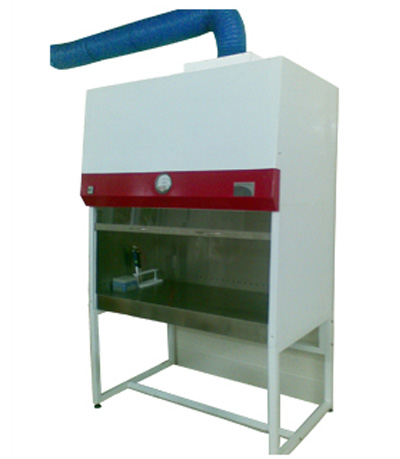
Class I Biological Safety Cabinet in Chennai

We have domain expertise in offering an extensive range of Class I Biological Safety Cabinet, which is available in three different modules. Our range of Class I Bio Safety Cabinets meets the laboratory requirements for life science research, clinical or industrial applications. These Class I Biosafety Cabinets are manufactured using stainless steel for easy cleaning and maintenance and excellent powder coating finish helps to prevent microbial or bacterial growth.

Technical specifications :
  • Cleanliness : Class 100
  • Particle retention : 0.3 micron
  • Velocity : 90FPM + 20%
  • Illumination : 750 – 800 lumen
  • Noise level : 60-65 decibels
  • Standard : FED 209E
  • Power supply : 220v single phase
Advantages :
  • Provides personnel and environmental protection
  • It is similar in air movement to a chemical fume but usually has a limited fixed work access opening and the exhaust air must be HEPA filtered, to protect the environment
  • Designed for general microbial research with low and moderate-risk agents
  • The work zone, which type is much smaller than a chemical fume hood, is geared to working with biological whose process/ producers dictates the use of moderate amounts of volatile liquids, that are suitable for recirculation cabinets

Class II Bio Safety Cabinet in Chennai

A. Class II Type B2 Cabinet:

Type B2 cabinets are sometimes referred to as “total exhaust”.

This type of unit:

    • Maintains minimum average inflow velocity of 100 fpm through the work area access openings.
    • Has HEPA-filtered downflow air drawn from the laboratory or outside air (i.e., downflow air is not recirculated from the cabinet exhaust air).
    • Exhaust all inflow and downflow air to the atmosphere after filtration through HEPA filter without recirculation in the cabinet or return to the laboratory room air.
    • Has all contaminated ducts and plenums under negative pressure, or surrounded by directly exhausted negative pressure ducts and plenums (not recirculated through the work area).

Type B2 cabinets may be used with biological agents treated with toxic chemicals and radionuclides required as an adjunct to microbiological studies.

A. Class II Type A2 Cabinet:

Type A2 Cabinets are sometimes referred to “convertible” type units. Some manufactures of equipments have described their” convertible” unit (from Type A Type B) as having a change in air balance from 70 percent recirculate and 30 percent exhaust to 30 percent recirculate and 70 percent exhaust.

Type A2 cabinets are suitable for work with biological agents treated with minute quantities of toxic chemicals and trace quantities of radionuclides that will not interface with the work if recirculated in the downflow air.

All of the contaminated air flows to a common plenum where part of the air is recirculated and part is exhausted. Essentially, the cabinet Type A2 performs as a Type A with a change in air balances.

These types of units are designed to:

  • Maintain a minimum average inflow velocity of 100 fpm through the work area access opening. (Supply air to the workspace and exhaust air flowing through HEPA filters from a common plenum).
  • Have HEPA-filtered down flow air from that is a portion of the mixed down flow and inflow air from a common exhaust plenum.
  • Have all biological contaminated ducts and plenums under negative pressure or surrounded by negative pressure ducts or plenums. This does lend the “convertible” Type A2 some credence as being different from as type A.

Our Gallery

MATERIAL OF CONSTRUCTION (MAIN BODY) MODEL NO DIMENSIONS
EXTERNAL (W X D X H) INTERNAL (W X D X H)
CRCA / GI Powder Coated / Stainless Steel 304 MFD-BS/A2-600 750 x 875 x 2250 mm 610 x 610 x 610 mm
MFD-BS/A2-900 1050 x 900 x 2250 mm 915 x 610 x 610 mm
MFD-BS/A2-1200 1350 x 900 x 2250 mm 1220 x 610 x 610 mm
MFD-BS/A2-1800 1950 x 900 x 2250 mm 1830 x 610 x 610 mm
Material of Construction (Work Table) Stainless Steel 304
Average Air Velocity 90 ± 20% FPM
HEPA / ULPA Efficiency 99.997% / 99.999%
Class Level ISO 3 / 5 (Class 100)
Noise Level 65 ± 5 dB
Electrical 230 V, 50 Hz, Single Phase
Special Features Motor driven front door, alarm, HEPA filter blockage, timer for UV light, power socket inside the cabinet, pressure sensor monitoring, digital airflow verification,, interior eye level display, display parameters including down flow air velocity, total operating hours.
Standards US FED STD 209 E, ISO 14644-1, IEST- RP-CC-002-2, BSI
Certifications CE & ISO
Note: The above mentioned model are available with Microprocessor controls and Custom built types also

Class III Bio Safety Cabinet in Chennai

Class III Cabinets are defined as a totally enclosed ventilated unit of gas-light construction. Operations in the cabinet are conducted through hand-holes with rubber gloves. The cabinet unit is maintained under negative air pressure of at least 0.5 inch water gauge (12.7mm WG).

Supply air is drawn into the cabinet through HEPA filters. The exhaust air treated by double incinerations. The Class III Cabinets are suitable for work with agents that require biosafety level 1, 2, 3 or 4 containment.

Class III biological safety cabinet systems aid in the control of airborne particulate contaminants generated during various procedures, including weighing and diluting chemical carcinogens, working with high risk agents or high concentrations of low or moderate risk agents, or when there equipment which generates high volume aerosol is used.

Our Gallery

Technical Features

MATERIAL OF CONSTRUCTION (MAIN BODY) MODEL NO DIMENSIONS
EXTERNAL (W X D X H) INTERNAL (W X D X H)
CRCA / GI Powder Coated / Stainless Steel 304 MFD-BS/-III-600 750 x 875 x 2250 mm 610 x 610 x 610 mm
MFD-BS-III-900 1650 x 900 x 2250 mm 915 x 610 x 610 mm
MFD-BS/A2-1200 1950 x 900 x 2250 mm 1220 x 610 x 610 mm
Material of Construction (Work Table) Stainless Steel 304
Average Air Velocity 90 ± 20% FPM
HEPA / ULPA Efficiency 99.997% / 99.999%
Class Level ISO 3 / 5 (Class 100)
Noise Level 65 ± 5 dB
Electrical 230 V, 50 Hz, Single Phase
Special Features Motor driven front door, alarm, HEPA filter blockage, timer for UV light, power socket inside the cabinet, pressure sensor monitoring, digital airflow verification,, interior eye level display, display parameters including down flow air velocity, total operating hours.
Standards US FED STD 209 E, ISO 14644-1, IEST- RP-CC-002-2, BSI
Certifications CE & ISO

Benefits of Biosafety Cabinets

  • Help protect personnel from exposure to biological aerosols during suitable procedures.
  • Help limit environmental release of biological aerosols when the cabinet is correctly selected and operated.
  • Class II cabinets can provide product protection for appropriate procedures.
  • Provide a defined workspace for biological laboratory activities.
  • Support laboratory biosafety procedures and risk-management practices.
  • Can be selected according to the containment needs of different laboratory applications.

A biosafety cabinet is not a substitute for proper training, personal protective equipment, validated operating procedures or a laboratory risk assessment. It should not be confused with a laminar airflow cabinet, which may protect the product but does not necessarily provide personnel or environmental protection.

How to Choose the Right Biosafety Cabinet

Consider these important factors before purchasing:

  1. Biological risk assessment: Identify the materials and procedures to be performed.
  2. Cabinet class: Select Class I, II or III according to the required protection.
  3. Work area dimensions: Choose a cabinet that accommodates the equipment and workflow.
  4. Filtration and airflow: Verify the filter specifications, airflow design and exhaust requirements.
  5. Installation requirements: Assess room layout, electrical supply, ventilation and available space.
  6. Certification and testing: Confirm applicable standards and the required commissioning or performance tests.
  7. Maintenance support: Plan for filter servicing, inspections and periodic certification by qualified personnel.

Why Choose MicroFlow Devices India Private Limited?

MicroFlow Devices India Private Limited serves laboratory and cleanroom equipment requirements for specialized applications. Customers can contact the company to discuss their laboratory needs and confirm the availability and specifications of suitable equipment.

  • Focus on laboratory and cleanroom-related equipment.
  • Support for discussing application requirements.
  • Assistance with product specifications and selection enquiries.
  • Consideration of laboratory layout and operational needs.
  • Product and service enquiries, subject to the equipment and support offered.

Get Direction to Micro Flow, Write a review about Micro Flow

Contact Biosafety Cabinet Manufacturers in Chennai

Looking for Biosafety Cabinet Manufacturers in Chennai for a pharmaceutical laboratory, biotechnology facility or research centre? Contact MicroFlow Devices India Private Limited to discuss your application, cabinet class, workspace requirements and relevant technical specifications.

Frequently Asked Questions

1. What is a biosafety cabinet used for?

A biosafety cabinet provides a controlled workspace for handling suitable biological materials and helps protect personnel, the environment and, in certain cabinet classes, the work itself.

2. What are the main types of biosafety cabinets?

The main types are Class I, Class II and Class III. They differ in containment design and the levels of personnel, environmental and product protection provided.

3. What is the difference between a biosafety cabinet and a laminar airflow cabinet?

A biosafety cabinet is designed to provide specified biological containment protection. A conventional laminar airflow cabinet primarily protects the work from airborne contamination and may direct air toward the operator, so it should not be used as a substitute for a biosafety cabinet when biological containment is required.

4. Do biosafety cabinets use HEPA filters?

Many biosafety cabinets use HEPA filters as part of their airflow and containment design. The filter arrangement depends on the cabinet class and model.

5. Where are biosafety cabinets commonly used?

They are used in suitable pharmaceutical, microbiology, biotechnology, diagnostic, medical research and academic laboratories.

6. How often should a biosafety cabinet be tested?

Testing and certification should follow the applicable standard, manufacturer’s recommendations, local requirements and laboratory procedures. Testing is generally needed after installation or relocation and following relevant repairs or filter changes.

Happy to help!

Sun – Mon, 9 am to 9 pm
Call Now Button