Frequently Asked Questions About Air Curtains
1. What is an air curtain?
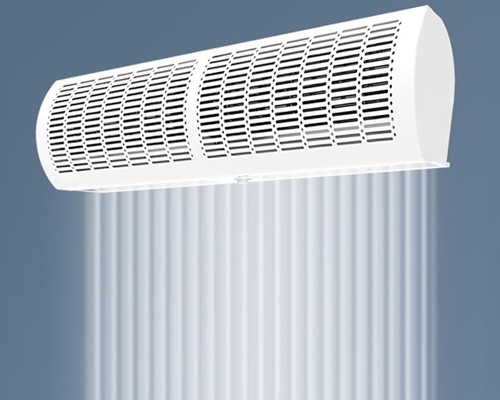
An air curtain is a device that produces a controlled stream of air across an open doorway or entrance. It helps reduce the exchange of indoor and outdoor air and can help limit the entry of flying insects, dust, and outside air when properly selected and installed.
2. What are the main applications of air curtains?
Air curtains are commonly used in commercial buildings, factories, warehouses, laboratories, hospitals, food processing facilities, shopping centres, and other locations with frequently opened entrances.
3. What are the benefits of installing air curtains?
Air curtains can help reduce unwanted air exchange, improve indoor comfort, limit insect entry, and support temperature management. Their effectiveness depends on airflow, doorway dimensions, installation height, building pressure, and surrounding conditions.
4. How do air curtains work?
An air curtain uses a fan and an air outlet to direct a stream of air across a doorway. This stream acts as an air barrier that helps reduce the movement of air between two spaces while allowing people and materials to pass through.
5. Are air curtains suitable for industrial applications?
Yes, appropriately selected air curtains can be used at industrial entrances, production areas, warehouses, and loading zones. The equipment should be chosen according to doorway size, environmental conditions, airflow requirements, and the nature of the industrial process.
6. Can air curtains be used in laboratories and cleanrooms?
Air curtains may be suitable for certain laboratory entrances and controlled environments. However, they do not replace cleanroom airlocks, HEPA filtration, pressure-control systems, or other validated contamination-control measures where these are required.
7. What types of air curtains are available?
Air curtains may include commercial, industrial, heated, non-heated, and application-specific models. Availability depends on the manufacturer’s product range, and selection should be based on the intended application and operating requirements.
8. How do I choose the right air curtain?
Consider the doorway width and height, mounting position, required airflow, indoor and outdoor temperature differences, wind conditions, building pressure, and frequency of door use. Reviewing these factors helps determine an appropriate air curtain configuration.